Romania Country Profile | Tax & Legal Framework | 2026
Oct 19, 2026

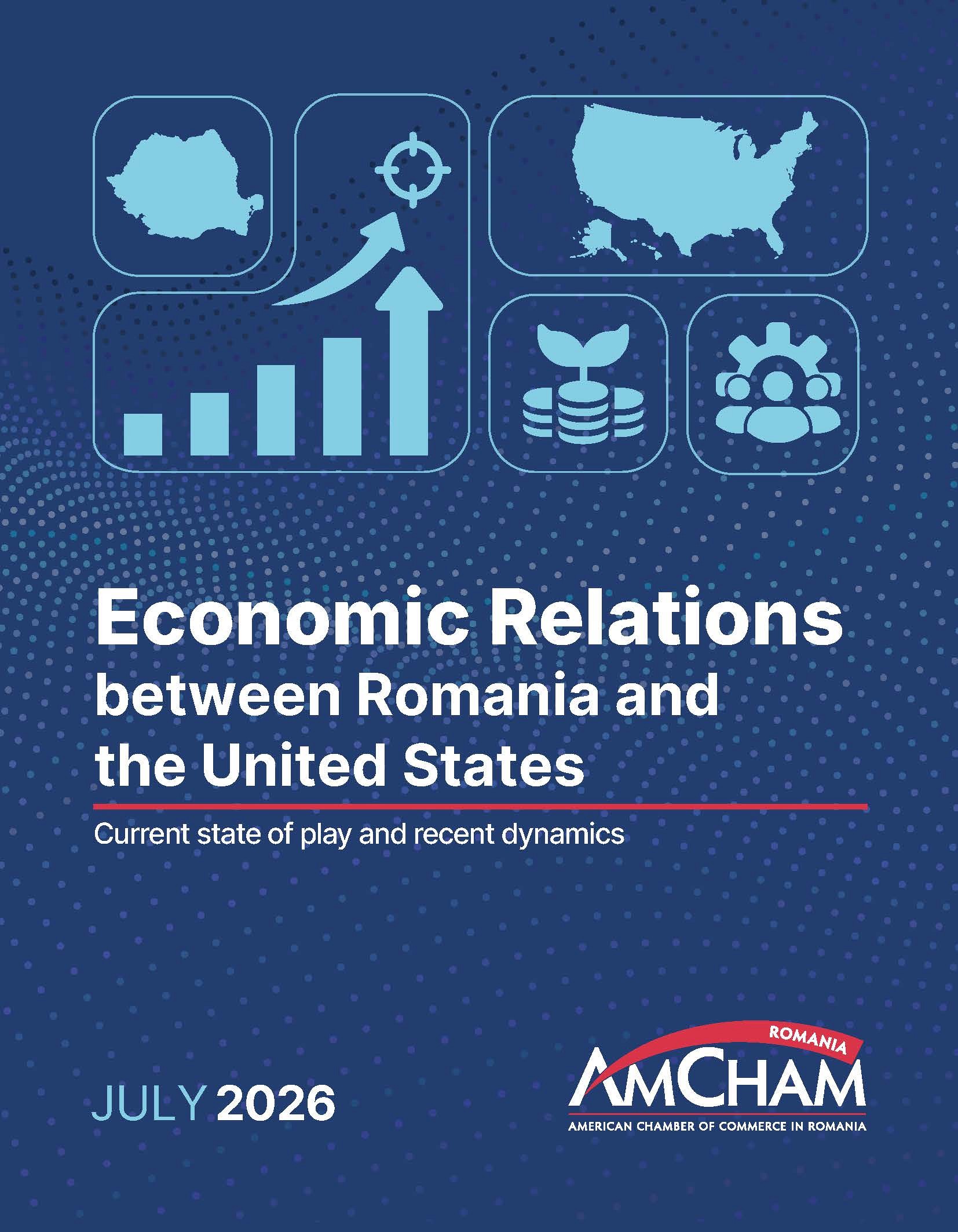
In the latest edition of the analysis of the Romania–U.S. economic relations, the American Chamber of Commerce in Romania (AmCham Romania) highlights key indicators that reflect the economic relationship and perspectives to further strengthen this cooperation into a long-term driver of Romania's economic growth.
The continued growth in trade and sustained U.S. investment, concentrated in strategic sectors such as technology, business services, and advanced manufacturing, together with sectoral partnerships in energy and defense, reinforce the United States' position among Romania's most important economic partners. The increase in Romanian exports to the U.S. market reflects the growing maturity and competitiveness of the Romanian economy, strengthening the case for Romania to be recognized by U.S. companies as a capable and reliable partner.
Ranking as the fourth-largest foreign investor in Romania, the United States remains the country's largest non -EU investor. It is also Romania's 15th largest export destination for goods and services.
According to the latest available data, in 2025, the Romania–U.S. economic partnership is characterized by the following key indicators:
As outlined in AmCham Romania's analysis, these bilateral developments reflect the broader evolution of the transatlantic economy, which continued to expand despite significant changes impacting global trade and investment. In 2025, the transatlantic economy reached a record value of approximately USD 10 trillion, remaining the world's largest and most integrated economic relationship.
Although defense procurement is not reflected in bilateral trade statistics, it represents an important component of the Romania–U.S. economic partnership, complemented by the contribution of U.S. companies in strategic sectors, including the development of dual-use technologies.
Advancing bilateral economic cooperation to a new level will depend largely on Romania's ability to provide a competitive investment environment in sectors of strategic interest to American investors.
"The economic relationship between Romania and the United States is on a solid trajectory, but its full potential can only be achieved within a stable and predictable business environment. Against the backdrop of the investment caution that characterized 2025, the prolonged domestic political tensions and their impact on the economy continue to raise concerns among investors. Romania can no longer compete solely on lower costs or geographic location. Investors increasingly value predictability, the implementation of structural reforms, and the development of infrastructure and skills needed for the economy of the future. These are the conditions required to attract high-value American investment with long-term impact," said Vlad Boeriu, AmCham Romania President.
The latest edition of the AmCham Business Barometer shows that investors remain confident in Romania's long-term potential but have become more cautious regarding future investment plans. In this context, policy predictability and the capacity to implement reforms are emerging as decisive factors for maintaining Romania's competitiveness.
American companies in the AmCham community responding to the survey indicate that leading priorities for retaining and attracting investment must include predictable public policies and macroeconomic stability, reduced bureaucracy supported by the digitalization of public services, a competitive fiscal framework, coherent economic policies, continued investment in infrastructure, and a strong rule of law.
Correlated with Romania's traditional competitive advantages, such as high-quality digital and cybersecurity infrastructure, resilient supply chains, a favorable labor cost-to-productivity ratio, and the confidence anchors provided by NATO and EU membership, and the prospect of accessing the OECD, these policy priorities will strengthen the Romania–U.S. economic partnership by supporting existing investors while attracting new high-value investments.
At a time when global investment increasingly favors stable, competitive economies capable of delivering strategic projects, Romania has an opportunity to further establish itself as a relevant destination for American investment and as a trusted partner within the transatlantic economy. AmCham Romania will continue to support this objective through its advocacy agenda promoting bilateral economic relations and reforms that enhance Romania's long-term competitiveness.
Methodological Note: Data on Romania–U.S. bilateral economic relations are based on AmCham Romania's internal analysis using information from the National Bank of Romania (NBR), the National Institute of Statistics (INS), and Eurostat. Data on the transatlantic economy are drawn from The Transatlantic Economy 2026, published by AmCham EU and the U.S. Chamber of Commerce. The analysis does not cover military acquisitions and defense cooperation.
Link to the analysis in full here.