Gociu Lawyers Launches “Business Holding Architecture,” a New Event Series for Romanian Entrepreneurs
Aug 31, 2026

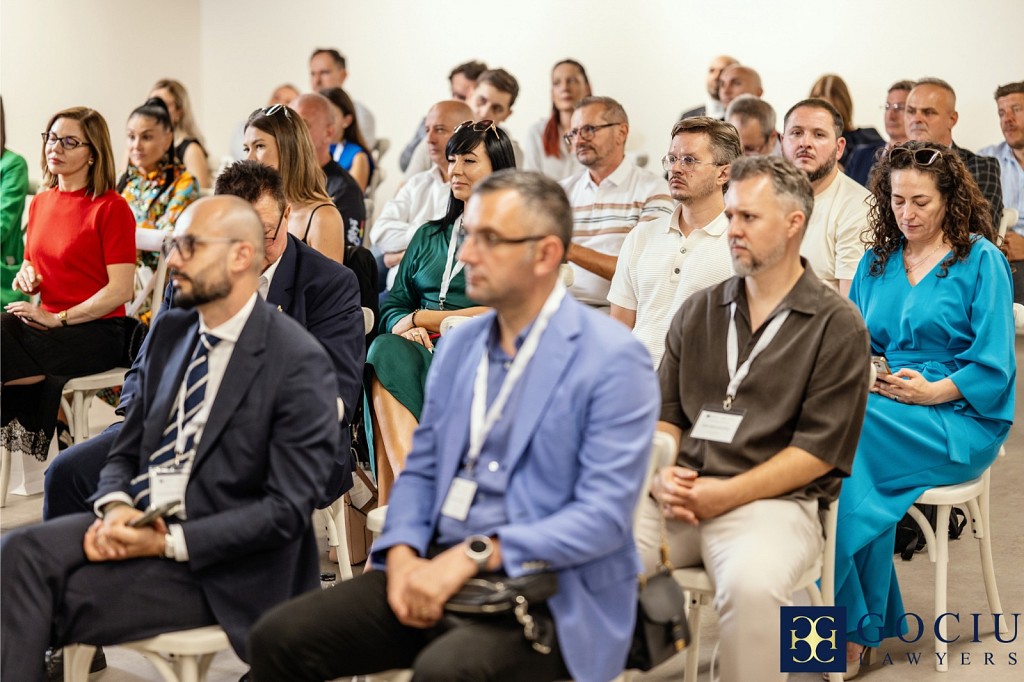
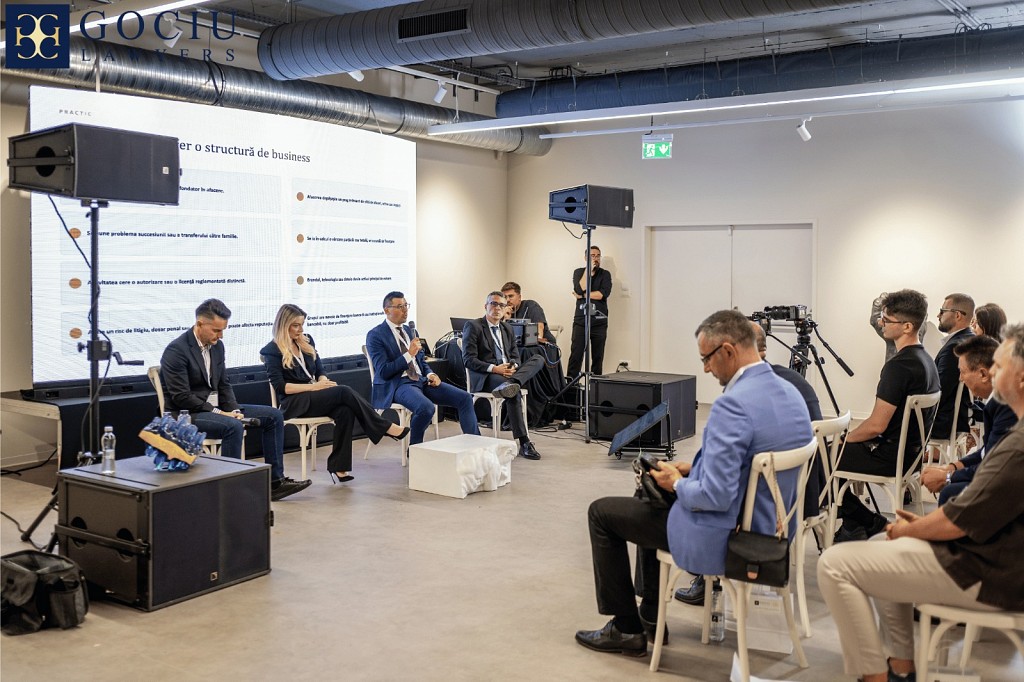
The first edition in Timișoara brought together legal, tax, M&A and banking perspectives around an increasingly relevant question for founder-led companies: how should the business structure evolve when a company becomes a group?
Gociu Lawyers, together with Elite Business Networking, hosted the first edition of Business Holding Architecture at ISHO Pavilion, creating a platform for founders, shareholders and executives preparing their companies for investment, financing, expansion, M&A transactions or succession.
The initiative addresses a common challenge in entrepreneurial markets: businesses often grow faster than the legal and financial structures behind them. A company initially built around a single operating entity and the direct involvement of its founder may, over time, accumulate strategic assets, investments, new business lines and operational risks within the same structure.
The need for structural maturity is also reflected in data. A regional analysis conducted by Gociu Lawyers across 223 companies in Timiș, Arad and Caraș-Severin, each reporting 2025 turnover of at least RON 100 million, found that 34.1% are still owned exclusively and directly by individuals, while only 15.7% have an identifiable holding company at the first shareholder level.
When structure becomes strategy
Business Holding Architecture approached the holding company not as an isolated tax mechanism, but as part of a broader business architecture. Ownership, the separation of operational risk, the protection of strategic assets, capital flows within the group and governance need to be aligned with the founder’s economic objectives: raising investment, securing financing, preparing for a potential exit, launching new business lines or transferring ownership to the next generation.
“A holding structure should not be viewed solely as a tax tool, nor as a solution reserved for very large companies. It is, above all, a structure for control, protection and growth.” – Adrian Gociu, Managing Partner, Gociu Lawyers
Adrian Gociu addressed the legal architecture and control logic of corporate groups; Cornelia Năstase, founder of CCTAX, focused on tax implications; Florin Cerna, founder of BrinkThink Management, discussed company preparation and valuation in the context of transactions; and Cristian Țepeneu, representing Banca Transilvania, brought the lender’s perspective. The format was designed to connect these disciplines before an investment or transaction turns restructuring into a time-sensitive exercise.
Business Holding Architecture continues in Bucharest on October 22, 2026, with the same objective: to build a practical conversation around the transition from organic growth to clearer, better-protected and more financeable, investable and transferable business structures.
About Gociu Lawyers
With offices in Timișoara and Bucharest and an international presence in Dubai, Gociu Lawyers has been advising entrepreneurs, investors and private families for more than a decade on projects involving complex legal and strategic considerations. The team’s work spans corporate and group structuring, holding structures, M&A transactions, tax, intellectual property, compliance and cross-border projects. Its practice is built around an integrated understanding of business, with legal solutions aligned to long-term objectives related to growth, investment, financing and asset protection.
Press contact: office@gociu.law | www.gociu.law