Deloitte analysis: Romania is the most dynamic M&A market in Central and Eastern Europe and maintains its second place in the region by volume
Apr 1, 2026
The stable democratic regime, the population of 19 million, with eight million active workers, the strategic geographical position, the Schengen, EU and NATO memberships, and the process of joining the Organization for Economic Co-operation and Development (OECD), natural resources, but also the underutilized economic potential are among Romania's strengths in the process of attracting foreign direct investment (FDI), according to the Opportunities for foreign investors in Romania study, conducted by the Bucharest University of Economic Studies at the initiative of the Deloitte Romania Foundation. The economic sectors with the highest development potential are green energy (part of the transition process to clean energy), logistics and nearshore production capacities (in the context of geopolitical tensions in the region), advanced digital services (high value-added IT&C services: research and development, artificial intelligence, cybersecurity) and the defense industry.
From a regional point of view, investment opportunities stand out especially considering the development disparities across the main regions of the country. The living standards on a national level (GDP/capita at purchasing power parity) reached 78% of the European Union (EU) average in 2024, but the distribution across regions is unequal - Bucharest-Ilfov is the most developed region (190% of the EU average), while the North-East region is at the opposite pole (47% of the EU average).
According to the study, the top three regions by FDI potential are the South-East (Constanta, Galati, Tulcea), with investment opportunities in renewable energy, maritime logistics, and the food industry, the North-East (Iasi, Bacau, Suceava), where there is available and competitive workforce, strong educational infrastructure, with development potential in IT&C, automotive, production and services, agri-food industry and logistics, as well as the Center (Cluj, Alba, Sibiu), which strengthens its role as a multifunctional region, with opportunities in IT&C, research and development, industry, education and infrastructure.
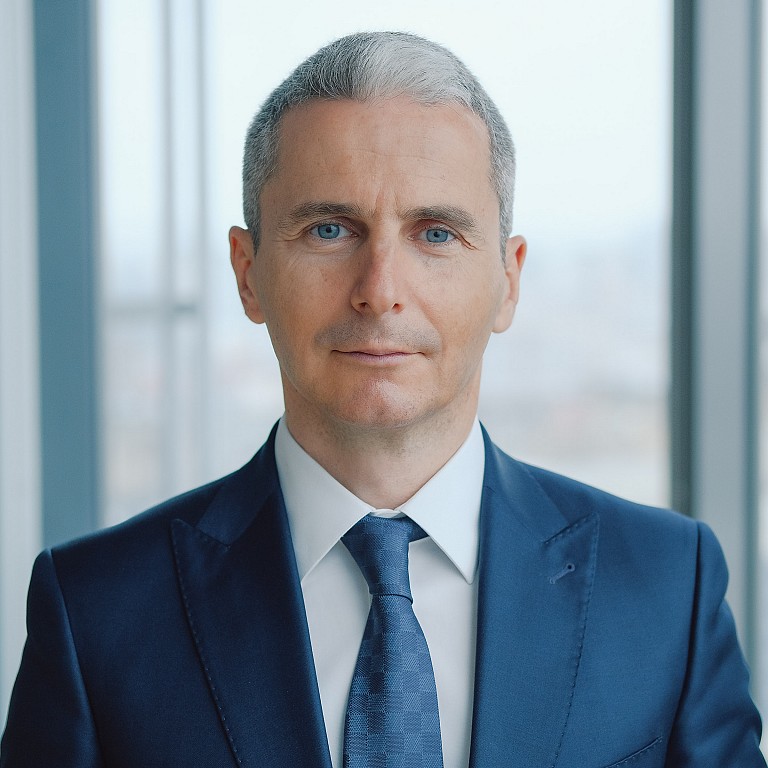
"Romania is an attractive destination for investment, which provides multiple and competitive opportunities in a dynamic and challenging European and global context. However, the potential is far from being capitalized on optimally, a belief on which we have built our initiative that starts from outlining Romania's investment profile, with opportunities and challenges, strengths and vulnerabilities, and aims at increasing its visibility amid foreign investors. This analysis shows that, despite challenges that most economies and societies are facing, Romania offers significant business opportunities based on strategic location in the EU, diverse natural resources, access to consistent European funds, competitive costs, a sizeable market with growing purchasing power, and developments in the digital sector create a solid basis for expansion. Furthermore, improved governance, economic and political stability, as well as the progress in infrastructure development recorded over the past years, confirm that Romania should be considered one of the most attractive investment destinations in Central and Eastern Europe," said Alexandru Reff, Country Managing Partner, Deloitte Romania and Moldova.
The study also includes a comprehensive analysis of the resources available to foreign investors who decide to invest in Romania, from human (the more than eight million active workers, competitive salary levels, digital and multilingual skills), to natural (energy - oil and gas, lignite, wind, solar, hydro, geothermal energy; essential raw materials - graphite, magnesium, rare earth elements, copper, gold; mineral water springs - over 2,500; arable land - 8% of the EU's utilized agricultural area; forest fund - 6.5 million hectares), and to transport infrastructure (railways - 19,600 km, 20% electrified; motorways - 1,300 km, of which 200 km completed in 2024), river and sea ports, airports in major cities.
At the same time, Romania offers an extensive framework of incentives to attract foreign direct investment, based on several strategic pillars, such as financial support (state aid, EU funds, including through the National Recovery and Resilience Plan, guarantees), business support infrastructure (industrial parks, logistics areas) and institutional facilitators (local authorities, national agencies).
"We are glad to have contributed with an academic perspective to an initiative so necessary to the Romanian economy, which highlights the main dimensions influencing Romania's investment attractiveness and provides a valuable benchmark to foreign investors. The study can also represent a strong basis for dialogue for substantiating public policy measures aimed at improving the investment climate and enhancing the country's ability to attract foreign direct investments," said Prof. Alina Mihaela Dima, PhD, Vice-rector, Bucharest University of Economic Studies.
The study also presents a comparative analysis between Romania and the countries in the region regarding the tax framework applicable to companies, which underlines that our country has certain competitive advantages in this area as well. Thus, the corporate tax of 16% is lower than in several other countries (Slovakia – 21-24%, Czech Republic – 21%, Poland – 19%), the incentives for research and development are more generous than in other states, the flat salary tax rate of 10% is competitive (although social contributions of 37.25% are added), and VAT is 21%, among the lowest in the region.
The Opportunities for foreign investors in Romania study, conducted by a team of experts from the Bucharest University of Economic Studies, is part of a broad Deloitte Romania Foundation initiative which aims to strengthen our country’s positioning as an attractive destination for foreign direct investments, in which Deloitte volunteers are involved - experts in various fields, which capitalize on their knowledge, international network and experience of working with foreign investors to increase Romania’s visibility in the international investment landscape and to facilitate dialogue between relevant stakeholders - public decision-makers, academia and business.
Deloitte provides industry-leading audit and assurance, tax and legal, consulting, financial advisory, and risk advisory services to nearly 90% of the Fortune Global 500® and thousands of private companies. The firm’s professionals deliver measurable and lasting results that help reinforce public trust in capital markets, enable clients to transform and thrive, and lead the way toward a stronger economy, a more equitable society and a sustainable world. Building on its 180-plus year history, Deloitte spans more than 150 countries and territories. Its objective is to make an impact that matters through its over 470,000 people worldwide.
Deloitte Romania is one of the leading professional services organizations in the country providing, in cooperation with Reff & Associates | Deloitte Legal, services in audit, tax, legal, consulting, financial advisory, risk advisory, business processes as well as technology services and other related services, through 3,300 professionals.
Please see Deloitte.ro to learn more about the global network of member firms.
© 2025. For information, contact Deloitte Romania