
What HR Directors don't know about the factors that support team performance in times of multiple crises
Aug 3, 2026
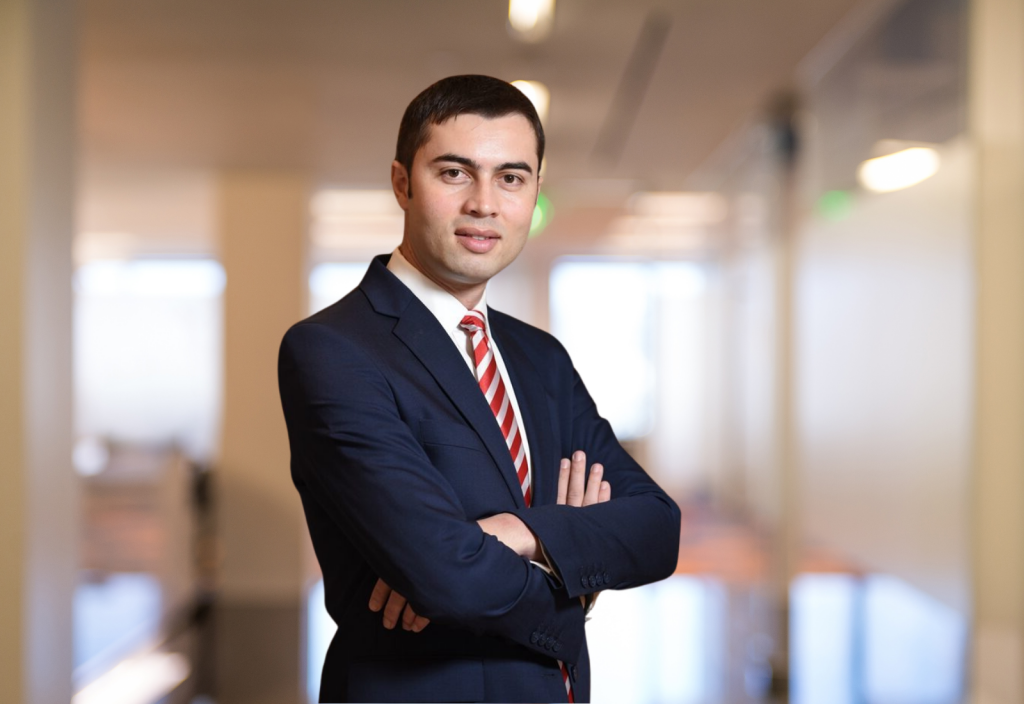
Author: Constantin Măgdălina, Expert Trends and Emerging Technologies
In many companies, teams exist only on the organizational chart. On paper, people form departments, projects, committees, commissions, boards. In reality, each person works within their own logic, with their own priorities and their own rhythm. Results come from individual effort, not from real coordination. This model consumes energy and creates tension.
A team does not become effective by simply gathering competencies. It becomes effective when it works as a living system. An organism is not a collection of independent organs. It is a network of interconnected roles, with clear flows and assumed dependencies.
If you want stable performance, you need more than good people. You need interdependence, defined roles, and work flows that create continuous movement. That is why it matters to know how to turn a group into a functional organism, without outdated recipes and without sterile theories.
1. Why most teams remain simple groups
Many leaders believe recruitment solves the problem. You hire competent people and expect results. In practice, every new hire brings their own habits, style, and expectations. Without a shared system, fragmentation appears.
You notice it quickly. People work well separately, but joint projects fall behind. Meetings repeat. Decisions are postponed. Responsibilities overlap or remain uncovered. Everyone defends their territory. There is no smooth movement.
This is not an attitude problem. It is an organizational architecture problem. You have good people inside a poorly designed mechanism.
Think of a sales team. One agent promises deadlines the operations team cannot meet. Operations delays delivery. The client gets upset. Marketing hears nothing. Everyone does their job locally, but the overall system loses.
When you see repeated conflicts between the same people, do not look for culprits. Look for missing structural interdependence. A real team does not mean people who get along. It means roles that support each other toward a shared result.
2. Interdependence as the foundation for performance
Interdependence does not appear naturally. People prefer control over their own work. Independence feels safe. But without assumed dependencies, there is no organism, only separate cells.
Interdependence means my result depends on you and your result depends on me. I cannot ignore you. You cannot bypass me. We are linked through process.
A simple example. In a consulting team, one consultant collects data, another analyzes it, another builds recommendations, another presents to the client. If one is late, the whole flow stops. This dependency creates discipline. It creates clarity. It creates shared responsibility.
To build interdependence, you need three things:
1. Shared goals, not only individual ones. If everyone has their own target, you get internal competition. If the team has a collective goal, cooperation becomes easier.
2. Processes that pass through several stages and several people. If one person can carry everything alone, you do not have a team. You have solo performers.
3. Transparency. People need to see where others are in the flow. Without visibility, synchronization does not appear.
Interdependence is necessary and beneficial, but it must not block the system.
3. Clear roles create coordination, not control
Many managers avoid role clarity to preserve flexibility. The result is widespread confusion. Two people do the same thing. Other activities remain undone. Frustration and blame appear.
A role does not mean a rigid job description. A role means your specific contribution to the shared organism. In a body, the heart does not compete with the lungs. Each “knows” its function.
In a healthy team, clear roles show themselves when people answer quickly and correctly these three questions:
1. What result do I produce for the team?
2. From whom do I receive input?
3. To whom do I deliver output?
A practical example. In an IT project, it matters who defines requirements, who validates them, who implements them, and who tests them. If these roles mix, misunderstandings, tension, and missed deadlines appear. If roles are clear, each person knows where their contribution starts and ends.
Roles do not limit initiative. They channel it. People know where they can step in and where it is not their role.
4. Work flows give life to the team organism
Interdependence and roles without flows create a static structure. For a team to function as an organism, you need continuous circulation of information and deliverables.
Flow means a clear sequence of steps. Who starts. Who takes over. Who finishes. When transfer happens. What quality criteria apply.
Without flows, people improvise. Everyone creates their own way of working. When these ways meet, friction appears.
A well-defined flow does not mean bureaucracy. It means less waste. Fewer clarifications. Fewer defects. Fewer surprises.
Look at teams that deliver consistently. They have short alignment rituals. They use shared tools. They follow simple rules for handing over work. They do not leave things hanging.
An easy example. A marketing team decides that every material passes through a fixed circuit. Brief, draft, feedback, revision, final approval. Everyone knows when they step in. Delivery time drops. Stress drops.
You can analyze your own team. How many activities run on the principle of “we will see along the way”? That is where you lose energy. That is where you need flow.
5. The leader as system architect, not super executor
When a team does not function, the leader tends to step directly into the work. He/she solves problems. Puts out fires. Makes decisions for others. In the short term, they look effective. In the long term, that person may hinder team maturity.
As a leader, your role is not to be the most competent cog. Your role is to design the system in which the cogs move without blockage.
That means creating real interdependence. Clarifying roles. Defining flows. Correcting deviations when they appear. Not doing the work instead of others.
A mature leader asks simple questions. Who depends on this result? Who needs to be involved earlier? What is missing from the process? Where does the flow break?
With this type of intervention, the team learns to self-regulate, like an organism that keeps its balance without constant external command.
6. Structure creates sustainable performance
A high-performing team does not come from luck or interpersonal chemistry. It comes from well-designed organizational architecture.
When people are linked through interdependence, roles are clear, and flows are smooth, the team starts to function like an organism. It no longer depends on heroic individual effort. It produces results consistently. It withstands pressure. It adapts quickly.
If you want this transformation, start with structure, not motivation. Motivation is prone to fluctuate. The system remains.
Build real dependencies. Define specific contributions. Create clear paths for work and information. Then let the team breathe inside this frame.
You do not need complicated theories. You need firm decisions about how people work together. There lies the difference between a group of individuals and an organism that delivers performance.
* * *
About Constantin Măgdălina
Constantin Măgdălina has 15 years of professional experience, during which he worked for multinational companies, both in the country and abroad. Constantin has a Master's degree in Marketing and Communication at the Bucharest Academy of Economic Studies. He is LeanSix Sigma and ITIL (IT Information Library®) certified, which facilitates a good understanding of processes and transformations within organizations. On the other hand, the certification obtained from the Chartered Institute of Marketing completes his business expertise. In the more than 4 years of activity within a Big 4 company, he initiated and coordinated studies that analyzed aspects related to the business environment in Romania. Among them are the economic growth forecasts of companies, knowledge management, the buying experience in the era of digital consumers, the use of mobile devices or the customer-centricity of companies in Romania. He is the author of numerous articles on topics related to innovation, streamlining business processes, digital transformation, emerging trends and technologies. He is invited as a speaker at numerous events and business conferences.