What HR Directors don't know about the factors that support team performance in times of multiple crises
Aug 3, 2026
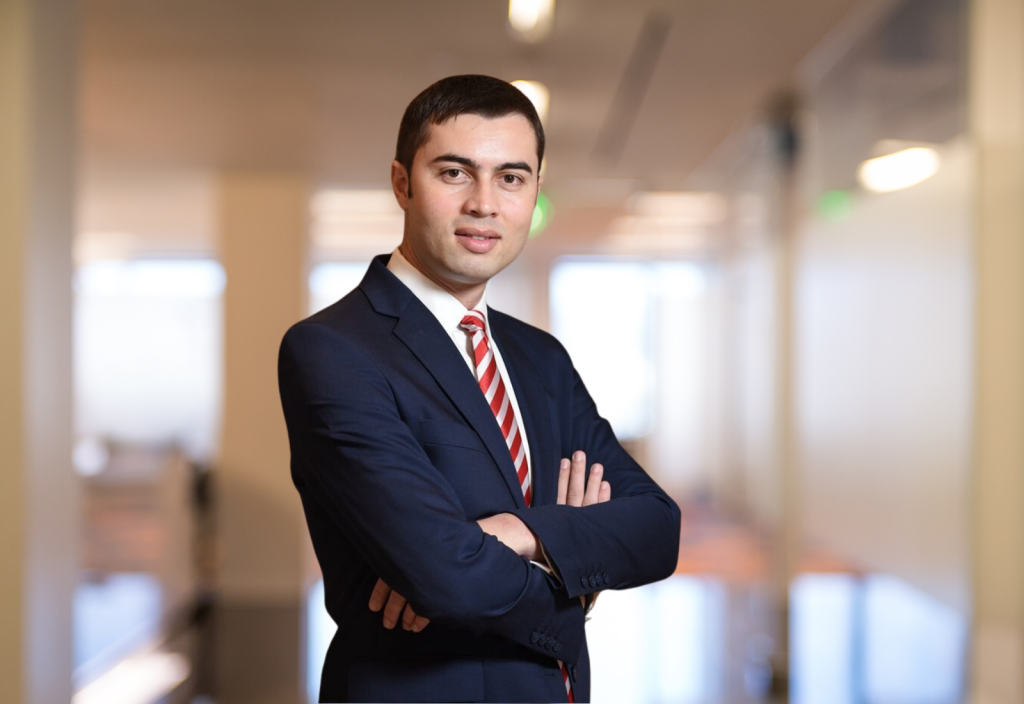
Author: Constantin Măgdălina, Expert Trends and Emerging Technologies
We often look at international rankings and are displeased when we see Romania at the bottom of the lists. The same thing happens when we look at economic competitiveness. In such moments, we criticize the government, the infrastructure, the business environment. We compare ourselves with other countries and quickly notice the gaps. But too rarely do we ask ourselves the question: “how competitive are each of us, as professionals, managers or entrepreneurs?”
A competitive professional is one who generates impact, maintains relevance in a constantly changing environment and demonstrates flexibility in the face of any challenge. That is why real change begins with honest introspection. If each of us invested more in personal development, in cultivating skills and in assuming responsibility for our own performance, we could contribute to a culture of excellence.
Can Romania be more competitive than the people who work here?
It is easy to become spectators of reality. We see the shortcomings, but we do not assume our share of responsibility. We complain that the country is not progressing, but we do not strive enough to become better either. If we want a more competitive Romania, we must start with our own development.
Can Romania be more competitive than the people who make it up? If you, as a professional or entrepreneur, do not develop, you do not help the country grow. The uncomfortable question is: what are you doing today to be better than yesterday? If the answer is “nothing”, then the problem is not so much with Romania as it is with you.
So, before judging the country, the industry or the company, we need to look in the mirror. If we ourselves do not increase our value and professional relevance, how could we demand that the environment around us be more performant? National competitiveness begins with personal competitiveness.
Is personal competitiveness the criterion that makes the difference?
A country’s competitiveness is measured by productivity, infrastructure, education and innovation. At the individual level, things are more straightforward. A competitive professional is one who adds value, remains relevant despite rapid change and can adapt to any context.
What does this mean in concrete terms? It means having up-to-date knowledge, diversified skills, the ability to learn quickly and the desire to constantly grow. It means delivering above-average results, being recognized for professionalism and having a solid reputation in your professional network.
The difference between the two roles lies in the investment you make in yourself. If you remain curious and willing to develop your skills, you remain valuable and hard to replace. If you settle for what you knew five or ten years ago, you stop learning and lose your relevance, becoming easily replaceable.
What do the excuses that block our evolution sound like?
“I don’t have time. I don’t have money. The company doesn’t support me.” Sound familiar? All of these are barriers you set for yourself. You find time for what you consider a priority. If you spend hours on social media, but can’t find two hours for a workshop, the problem isn’t lack of time, it’s lack of priorities.
The same goes for money. We invest in vacations, gadgets, or cars, but it seems “too much” to pay for a course. Whether or not you budget for learning is what sets you apart from competitive professionals.
And the ultimate excuse: “I already have experience, I have nothing more to learn.” Nothing could be more false. The market changes, technologies change, the required skills change. If you don’t change, you’ll be left behind.
The truth is that competitive professionals don’t wait for others to finance their development. They do it themselves. If you don’t invest in yourself, why would anyone else invest in you? A competitive professional doesn't wait for something to be offered to them. They search, test, invest.
There is no perfect context, but there are always resources available: physical or online courses, professional communities, coaching, informal mentoring. Do you want to take the plunge or do you prefer to stay stuck in excuses?
How does experience become a brake?
Experience is often seen as an absolute advantage. But without constant updating, it can become a real drag. The reality is that a large part of today's skills will be outdated in a few years. The World Economic Forum estimates that 44% of the skills of current employees will be irrelevant by 2027.
What does this mean? That almost half of what you know now will no longer be enough in the next 2-3 years. If you rely only on old experience, you risk getting stuck.
Many professionals are still navigating with old "maps" in a digitalized world. They refuse to accept new tools, emerging technologies or changes in mentality. And it is precisely this rigidity that makes them vulnerable.
The question is: how current are your skills? Can you admit that some of your habits and reflexes no longer work? Do you have the courage to start from scratch in a new field?
Experience remains an asset only when it is doubled by adaptability. An experienced professional open to learning has an advantage. One who relies only on the past becomes irrelevant. The choice is simple, but it requires courage: either you update your baggage, or you carry it like a burden.
What concrete steps can you take to stay competitive?
The first step is continuing education. Don’t rely on a degree you earned 10 or 20 years ago. Look for short, one-day open courses, workshops, conferences. Read relevant books and listen to podcasts in your field.
The second step is to diversify your skills. If you are a specialist in a field, try to acquire related skills. Engineers who learn about project management, marketers who understand data analysis or managers who master technology will always have an advantage.
The third step is connecting to professional networks. Networking is not just about exchanging contacts, but also access to ideas, collaborations and feedback. Get involved in communities, actively participate in events, write articles, express your opinions.
Another essential step is to develop interpersonal skills, the so-called soft skills. Communication, empathy, collaboration and leadership remain decisive, regardless of technological progress.
Finally, there is a need to measure personal progress. Set concrete goals: how many courses you will take per year, how many books you will read, what certification you will obtain. Constantly monitor your progress.
You are truly a professional when you are constantly learning
Entrepreneurs and managers have an additional responsibility: they are the mirror of the team. If their development stagnates, the company will not grow. Therefore, the essential question for them is: “am I the company’s engine or its main brake?”.
Today, change is the rule, not the exception. Automation, artificial intelligence and globalization are rapidly changing the labor market and the business environment. In this context, personal competitiveness is no longer an advantage, but a basic condition.
You have two options: to remain a critic of the too-little-competitive economic environment or to become a professional who is constantly developing. The first choice brings frustration and stagnation. The second ensures relevance, resilience and real growth prospects.
Romania will not be more competitive than its people, and people will not be more competitive than their decision to learn, grow and stay relevant. The question for each of us is simple: “where do I want to be, as a professional in the future and what am I doing today to get there?”
* * *
About Constantin Măgdălina
Constantin Măgdălina has 15 years of professional experience, during which he worked for multinational companies, both in the country and abroad. Constantin has a Master's degree in Marketing and Communication at the Bucharest Academy of Economic Studies. He is LeanSix Sigma and ITIL (IT Information Library®) certified, which facilitates a good understanding of processes and transformations within organizations. On the other hand, the certification obtained from the Chartered Institute of Marketing completes his business expertise. In the more than 4 years of activity within a Big 4 company, he initiated and coordinated studies that analyzed aspects related to the business environment in Romania. Among them are the economic growth forecasts of companies, knowledge management, the buying experience in the era of digital consumers, the use of mobile devices or the customer-centricity of companies in Romania. He is the author of numerous articles on topics related to innovation, streamlining business processes, digital transformation, emerging trends and technologies. He is invited as a speaker at numerous events and business conferences.