The anatomy of psychological safety in modern companies
Jul 16, 2026
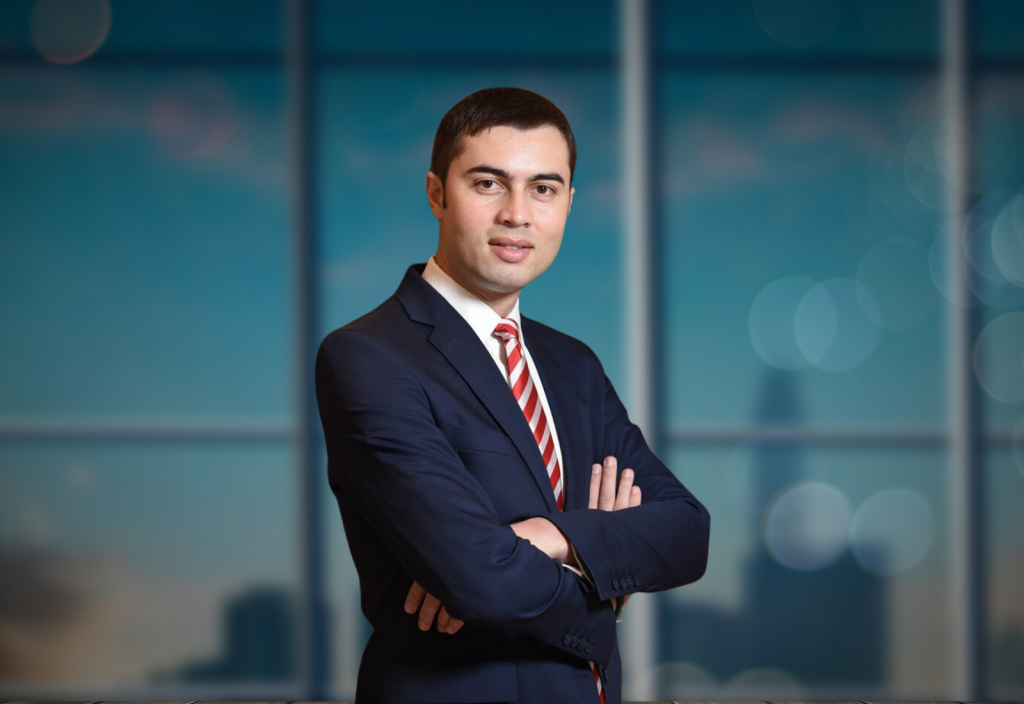
Author: Constantin Măgdălina, Expert Trends and Emerging Technologies
There are organizations with solid strategies, strong technology, and well-prepared people, yet they move forward slowly. There are also companies with more limited resources that make decisions quickly, collaborate efficiently, and adapt without friction. The difference is not always in budgets, processes, or capabilities. Often, the difference is called trust.
Trust is the invisible infrastructure on which every organization operates. It does not appear in financial statements or organizational charts, yet it shapes every decision, every meeting, and every professional relationship. When trust exists, information flows faster, people take responsibility, conflicts are resolved more easily, and the organization gains coherence. When it is missing, every interaction becomes more costly, every decision requires repeated verification, and energy is consumed by control, justification, and defense.
Seen this way, trust is not only a moral value or a leadership trait. It is an economic and organizational mechanism that reduces uncertainty and creates predictability. For this reason, trust can be considered the universal binding force of the professional environment. It connects the individual with the team, the employee with management, and the company with the external environment. When these forms of trust reinforce each other, organizations function smoothly. When one of them breaks, the effects spread throughout the system.
Self-trust, the starting point of performance
The first form of trust is the one every professional has in their own abilities. Self-trust does not mean certainty that you will always be right. It means the belief that you can analyze a situation, make a decision, and learn even if the outcome is not the desired one.
A professional with self-trust takes responsibility, asks for feedback, asks questions, and accepts that they do not have all the answers. Paradoxically, truly confident people do not feel the need to constantly prove they are the best. They invest energy in solving problems, not in protecting their image.
In contrast, a lack of self-trust produces behaviors that affect the entire organization. Decision avoidance appears, along with excessive perfectionism, fear of mistakes, resistance to change, and a constant need for validation. Each of these slows down activity and increases the cost of collaboration.
Self-trust also has a contagious effect. Managers who transmit calm and confidence inspire teams. Employees who understand their own value collaborate better and more easily accept new responsibilities. Organizations that invest in skill development indirectly strengthen professional trust as well.
Trust between colleagues, the fuel of collaboration
No modern organization can function solely through procedures. Collaboration requires fast information exchange, risk-taking, and the willingness to depend on others’ work. All of this is only possible in the presence of trust.
When colleagues trust each other, communication becomes direct, conflicts are addressed before they escalate, and ideas circulate without fear of ridicule. Teams learn faster because mistakes are analyzed, not hidden.
In organizations where trust is missing, the opposite happens. Information is kept as a source of power. People excessively document every conversation to protect themselves. Simple decisions require multiple approvals. Time spent on verification exceeds time spent on actual problem-solving.
This is one of the least visible organizational costs. Productivity does not drop because people work less, but because energy is consumed by defensive mechanisms. Instead of creating value, people continuously try to reduce the risks generated by lack of trust.
For this reason, high-performing organizations place special emphasis on building psychological safety. People must be able to express different opinions, acknowledge mistakes, and ask for help without fear of disproportionate consequences.
Trust between employees and management, the foundation of organizational coherence
The relationship between management and employees is perhaps the most important form of trust within an organization. It determines the speed of change implementation and the degree of voluntary engagement in achieving objectives.
Trust emerges when there is consistency between what leaders say and what they do. It is not promises that build trust, but predictable managerial behavior.
Employees more easily accept difficult decisions when they understand their logic and when they see that rules apply equally to everyone. In contrast, lack of transparency generates interpretations, rumors, and suspicion. Very quickly, the organization begins to consume resources to counteract the effects of mistrust it has created itself.
Managers tend to over-control activity. Employees respond with minimal engagement. A vicious cycle emerges, where each side interprets the other’s behavior as further proof that trust is impossible.
Research by Stephen M. R. Covey on the concept of the “Speed of Trust” shows that trust simultaneously influences two essential variables. When trust is high, decision speed increases and costs decrease. When trust is low, processes slow down and administrative costs rise. The same phenomenon is observed in numerous studies on organizational culture and employee engagement.
Therefore, trust is not merely a result of good leadership. It is a measurable competitive advantage.
Trust in the organization, employer brand and commercial brand
Trust in an organization is externally visible through two forms: the employer brand and the commercial brand. Both are direct expressions of the same reality, the level of trust accumulated over time.
A brand is not a well-told story. It is an experience repeatedly lived by people. When experiences are consistent, trust emerges. When trust stabilizes, the brand emerges. The brand is the visible form of trust. Trust is the invisible form of the brand.
When people trust a company as an employer, a strong employer brand emerges. This is reflected in talent attraction, retention, and internal recommendations. Lack of trust leads to high turnover and constant recruitment costs.
The commercial brand follows the same principle. Customers do not buy only a product. They buy the anticipation of an experience. If the experience confirms the promise, trust increases. If it contradicts it, trust decreases immediately.
When customers trust a company, a strong commercial brand emerges. When trust declines, the company enters a cycle of price pressure, discounts, and higher retention costs.
Trust between business and regulators, the foundation of economic prosperity
There is also a less discussed dimension of trust: the relationship between companies and the institutions that regulate economic activity. Prosperous economies operate on predictable and consistently applied rules. Investors take risks when they trust that the rules of the game will not change arbitrarily. Entrepreneurs invest when they can estimate costs and anticipate the effects of public decisions.
When this trust is missing, additional costs appear across the entire economy. Contracts become more complex. Legal checks multiply. Companies allocate significant resources to compliance and protection instead of innovation and growth.
Economist Francis Fukuyama argued as early as the 1990s that a society’s level of prosperity is closely linked to its social capital, with trust being a central element. Later research by the Organisation for Economic Co-operation and Development and the World Bank confirmed that high-trust societies generally record higher investment levels, lower transaction costs, and stronger cooperation capacity.
The concept of transaction costs, developed by economist Oliver Williamson following Ronald Coase, explains this phenomenon clearly. The lower the level of trust between two parties, the higher the costs associated with negotiation, monitoring, and contract enforcement. Lack of trust therefore creates an invisible tax that slows down the entire economy.
Trust thus becomes a strategic resource not only for organizations, but also for a country’s competitiveness.
Trust is built before it is needed
In many organizations, trust is treated as a result of success. In reality, the relationship works the other way around. Success is easier to achieve where trust already exists. It provides coherence to decisions, reduces collaboration costs, and creates predictability in a constantly changing environment.
Building trust does not require spectacular initiatives. It starts with consistency, transparency, and honoring commitments, no matter how small. It continues with honest communication, taking responsibility, and leaders explaining not only what decisions they make, but why they make them. At the same time, every professional contributes to this invisible capital through how they keep their promises, collaborate, and take ownership of their mistakes.
As technology rapidly changes processes and artificial intelligence automates more and more activities, trust remains one of the few competitive advantages that cannot be replicated by algorithms. It continues to be the element that turns a group of people into a team, a company into a high-performing organization, and an economy into an attractive space for investment. In this sense, trust is not just a human value. It is the invisible architecture that supports prosperity, collaboration, and long-term development..
* * *
About Constantin Măgdălina
Constantin Măgdălina has 15 years of professional experience, during which he worked for multinational companies, both in the country and abroad. Constantin has a Master's degree in Marketing and Communication at the Bucharest Academy of Economic Studies. He is LeanSix Sigma and ITIL (IT Information Library®) certified, which facilitates a good understanding of processes and transformations within organizations. On the other hand, the certification obtained from the Chartered Institute of Marketing completes his business expertise. In the more than 4 years of activity within a Big 4 company, he initiated and coordinated studies that analyzed aspects related to the business environment in Romania. Among them are the economic growth forecasts of companies, knowledge management, the buying experience in the era of digital consumers, the use of mobile devices or the customer-centricity of companies in Romania. He is the author of numerous articles on topics related to innovation, streamlining business processes, digital transformation, emerging trends and technologies. He is invited as a speaker at numerous events and business conferences.